
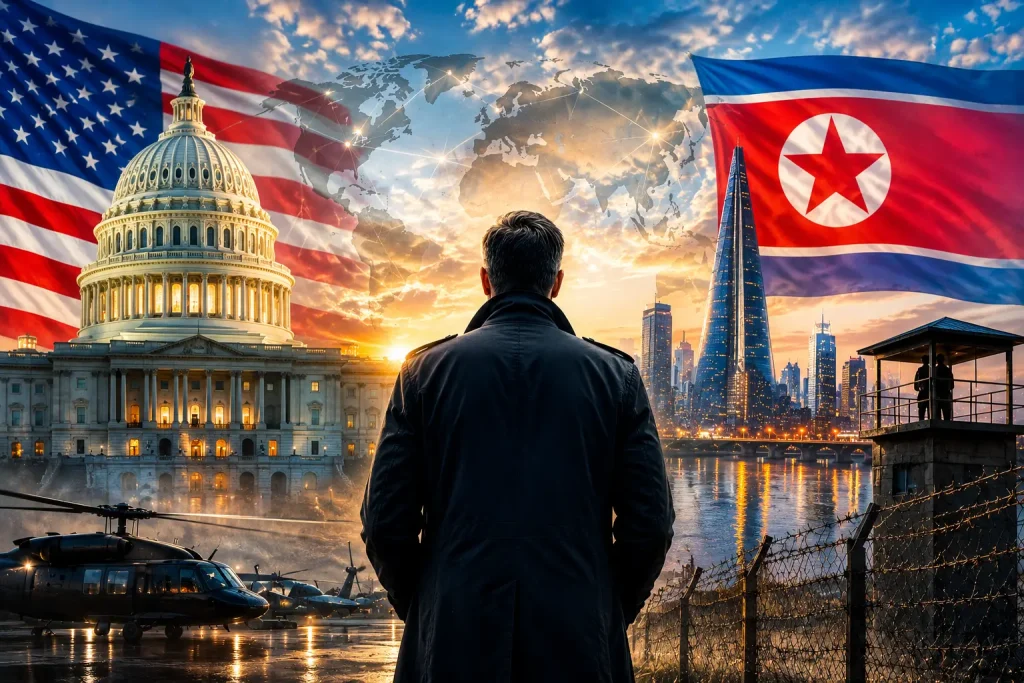
When I wrote A Time of Lies, I wanted to create the kind of political thriller that first made me fall in love with authors like Tom Clancy and Vince Flynn. I wasn’t interested in writing a story filled with superhuman heroes, impossible technology, or action scenes that ignored reality. Instead, I wanted to build a world grounded in intelligence operations, military strategy, political tension, and the uncertainty that exists when nations collide behind closed doors.
From the very beginning, I wanted North Korea to feel like more than just a setting. It needed to become a living force within the story. The secrecy, isolation, fear, and unpredictability surrounding the regime create an atmosphere where every decision carries consequences. My goal was to place readers directly inside that pressure alongside Brian McCarty and allow them to experience the tension firsthand.
Brian McCarty is a character I wanted readers to connect with because he is not an untouchable action hero. He is intelligent, disciplined, loyal, and determined, but he is also human. He makes difficult decisions, faces personal struggles, and carries the weight of responsibility throughout the story. For me, realism has always been more compelling than perfection, and I wanted Brian’s journey to reflect that.
Readers who enjoy Vince Flynn’s work will recognize the high-stakes intelligence conflicts and the constant feeling that danger is always one decision away. Fans of Tom Clancy will appreciate the political and military realism that drives the narrative forward. I’ve always believed that the strongest thrillers are not simply about action. They are about consequences, pressure, loyalty, survival, and the hidden forces operating behind governments and intelligence agencies.
One aspect of the novel that was particularly important to me was pacing. I wanted to balance political suspense, espionage, emotional conflict, and survival without losing momentum. Every chapter needed to move the story forward. Every conversation needed to matter. Even moments of silence had to feel dangerous because the situation could change at any moment.
I also wanted the geopolitical landscape to feel authentic. The conflicts in A Time of Lies are rooted in concerns that already exist in today’s world. International instability, intelligence warfare, political manipulation, and military escalation are not fictional concepts. They are realities that continue to shape global events, and I wanted the story to reflect that sense of urgency.
For readers who enjoy political thrillers that combine realism with emotional depth, A Time of Lies offers that experience. It blends classic espionage storytelling with modern geopolitical concerns while remaining focused on the people caught in the middle of those conflicts.
At its heart, this is not simply a story about surviving North Korea. It is a story about trust, loyalty, deception, and what happens when one man becomes trapped inside a system designed to destroy him.